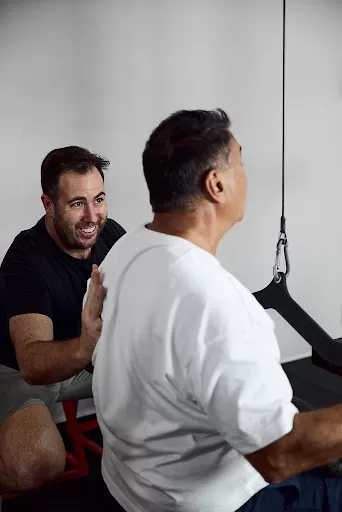
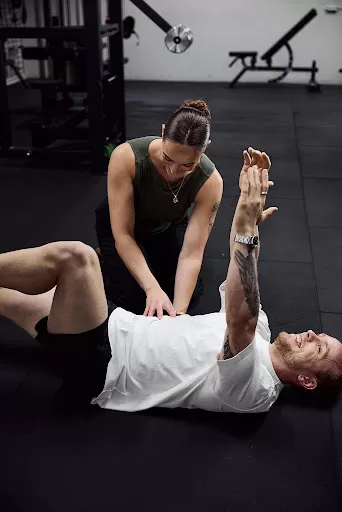
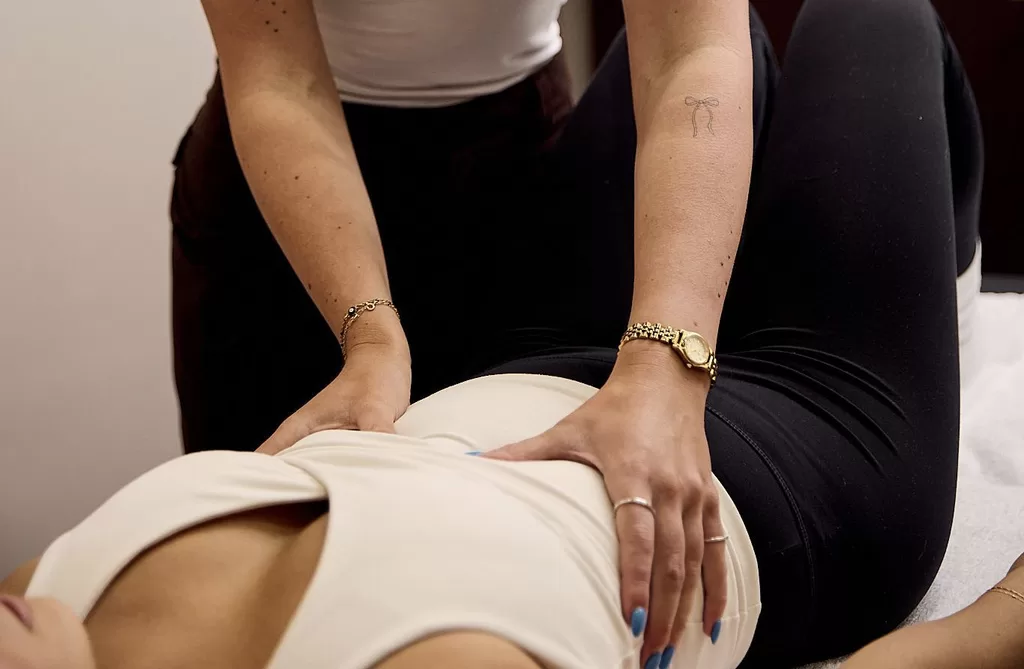
High-velocity low-amplitude refers to a type of manual therapy technique where a quick (high-velocity), controlled thrust is applied over a very small range of movement (low-amplitude. you might know it as the "cracking" or "clicking" technique - though the sound is just a harmless release of gas from the joint, not bones moving out of place.
When a joint gets "stuck" or restricted, the surrounding muscles can tighten and movement can become painful or limited. HVLA can help free up that joint quickly and safely.
No - the sound is not essential for a successful HVLA technique. The benefits come from the precise and rapid movement, not the noise. Some joints will make a sound when the gas inside the joint capsule is released, and others won't - either way, the technique can still be effective.
Yes - when performed by a trained professional like an osteopath, HVLA is very safe. Practitioners are trained to assess whether HVLA is appropriate for each individual, and it's not used in every case. Patient comfort, health history, and the specific condition all play a role in whether HVLA is recommended.
For some people (like those with osteoporosis, certain vascular conditions, or nervous system issues), alternative techniques might be more suitable.
HVLA is one of the many tools osteopaths use to support joint health and movement. While it may look dramatic, it's based on careful clinical reasoning, anatomy, and patient feedback.
If you're curious or unsure about HVLA, speak with your osteopath. it's always okay to ask questions or request alternative approaches - the goal is always to find the treatment that suits you best.
At The Osteo Centre, we extend our expertise to a diverse range of patients, offering customised care for various needs.


We’ve found a beautiful new home for the clinic just a suburb over — and we can’t wait for you to see it!
Same friendly team, same personalised care, just a brand new space designed to feel warm, welcoming and a little more like home.
Come see our new clinic space — we’d love to welcome you in!